
Pablo ran away.
After a misunderstanding about his schedule, our little brother, who has Down syndrome and is non-speaking, set off alone towards the place he thought was the right one. No phone, no means of communication, lost in Lyon.
It was the fright of our lives. He eventually made his own way to his day centre, without a scratch. But since that day, one question has never left us: what if it happens again?
Many families know this worry.
A common reality in autism and neurodevelopmental conditions
Wandering is not an isolated accident: a large share of autistic children try, at some point, to leave home or their setting on their own.

Difficulty judging danger, a need to get to a familiar place, not understanding a change of schedule… The causes vary, but the vigilance they demand of families never stops.
Standard GPS trackers are not enough
Solutions exist: tracking tags, GPS watches, safe zones, SOS buttons.
They are useful, but they respond to the emergency without building independence. They tell parents where their child is, not the child where they are going.

Yet for a person with a neurodevelopmental condition, these two needs are linked: making an outing safe also means giving them the landmarks that prevent disorientation.
Location is now available in Pictalk Buddy Watch
From the Pictalk Buddy app, you can now:
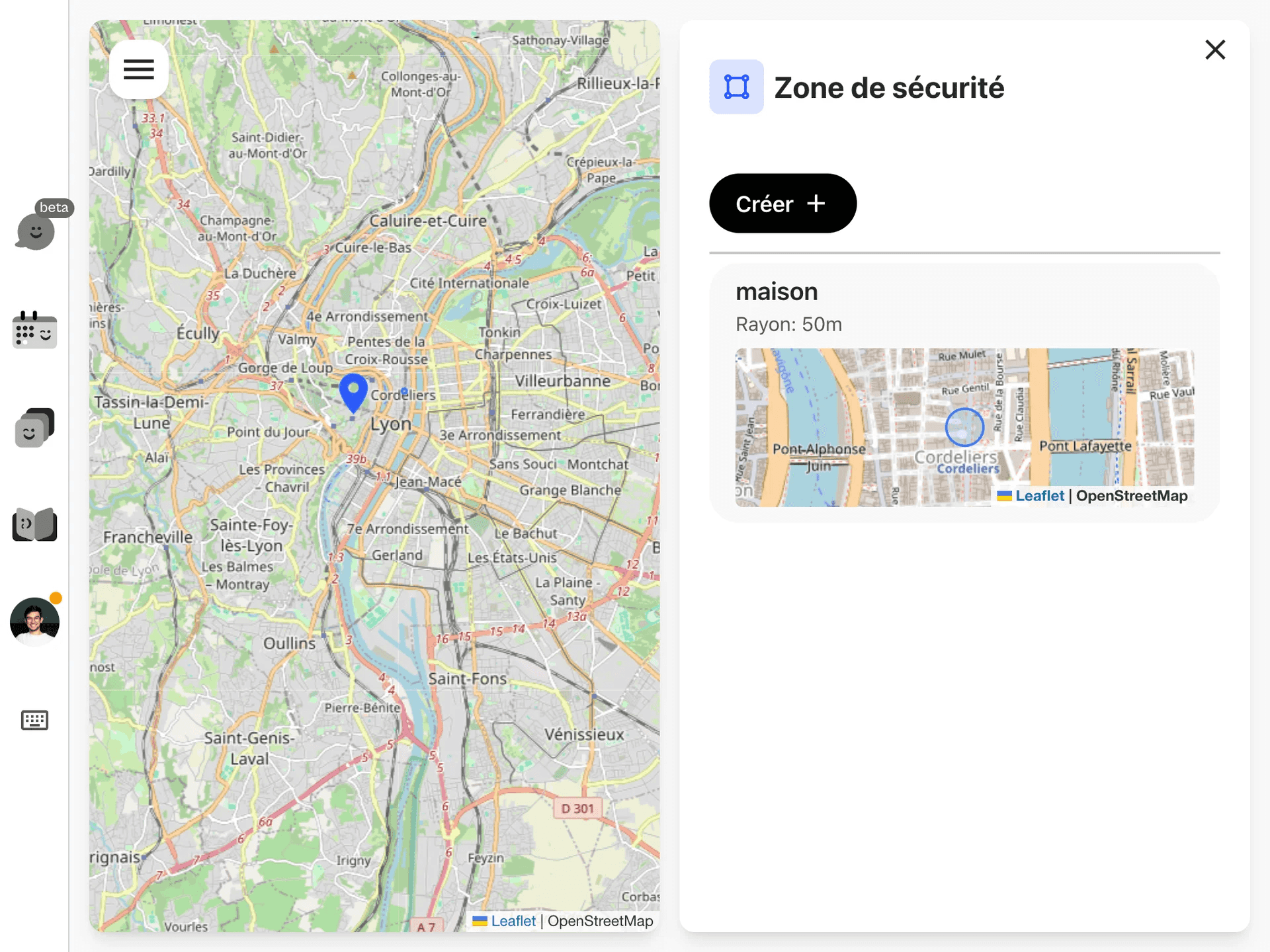
✅ See the watch’s location on a map in real time

✅ Set up your own places (home, day centre, usual route…), with no limit

✅ Get an instant notification when the watch leaves a place

Nothing to add: it’s built into the app you already use for the schedule and communication. On the watch, the person keeps their visual schedule and their emergency symbols. Location tracking backs them up; it doesn’t replace them.
Safety doesn’t mean surveillance
The person you support isn’t tracked to restrict their movements; they are protected so they can move around more. It’s the belief that has driven us from the start: independence should never be a privilege, and safety should never be a reason to limit it.
Don’t wait to go through what we went through with Pablo before you act.
👉 Discover Pictalk Buddy Watch and its new location feature 👉 A question about someone you care for? Contact us: alex@pictalk.org