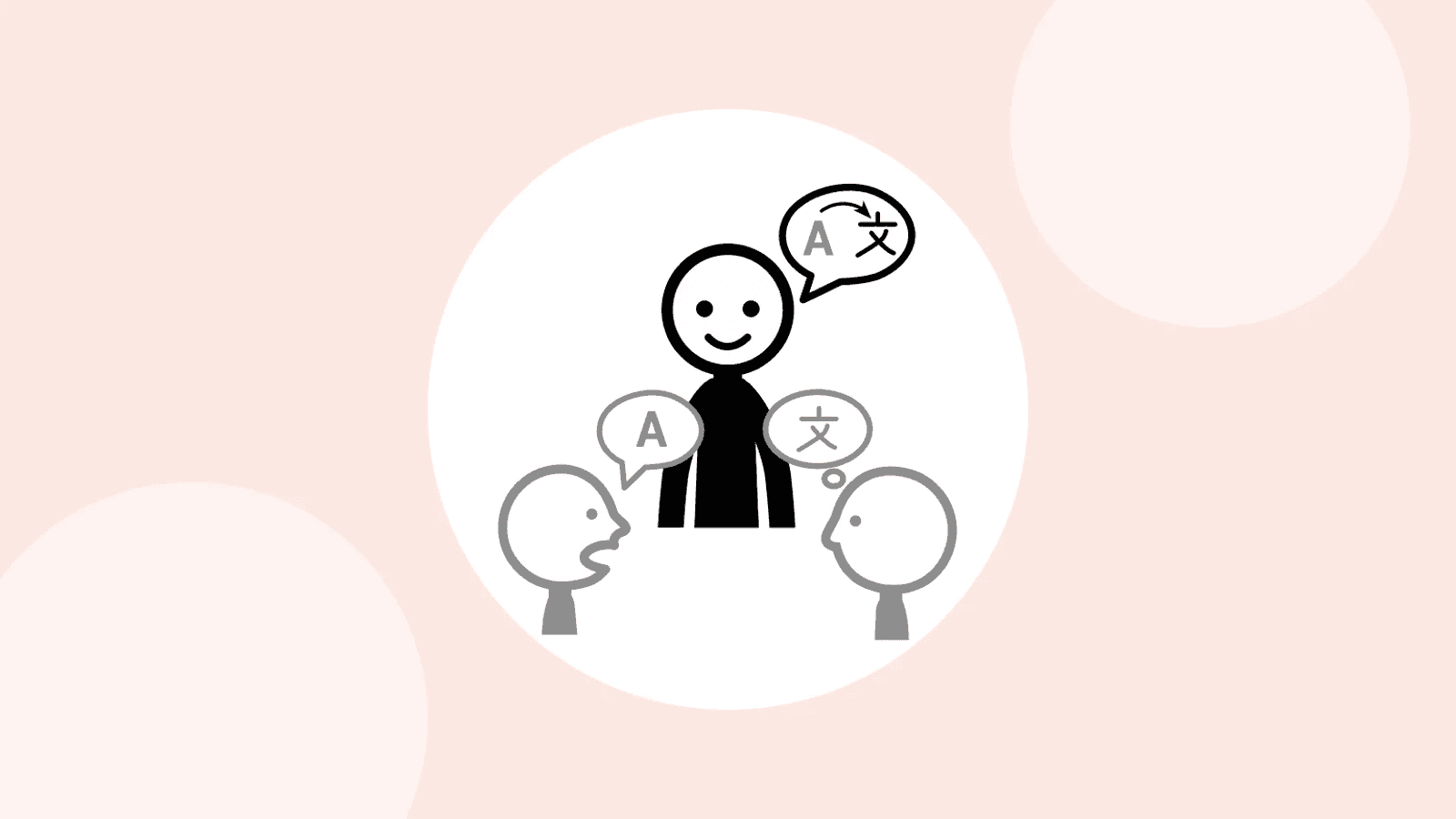

Arabic, Portuguese or Spanish at home, English at school: which language should the child’s AAC tool speak? Every language in their life. But you still need to avoid translating the school tablet word for word, and to know what to do when the family’s language is not offered.
Are two languages an obstacle?
No. Many parents have heard: ‘with his disability, it’s better to speak only one language to him’. This advice rests on intuition, not data: exposure to two languages does not disadvantage children with a developmental disorder (Ohashi et al., 2012, cited in Beukelman & Light, 2020).
The home language is the language of cuddles, arguments, recipes and grandma’s songs. Removing it from the communication tool cuts the child off from part of their family. Specialists even regard an AAC tool in a single language, for a family that speaks several, as a warning sign (Beukelman & Light, 2020).
One case reported in the literature shows this: a man who spoke Spanish at home and used an English alphabet board at school could only have a real conversation with his father once he was at university (Estrella, 2000, cited in Beukelman & Light, 2020). Years of conversation lost, because his tool did not speak his family’s language.
Why not simply translate the tablet?
Translating the school board word for word works badly, for four reasons (Soto & Yu, 2014, cited in Beukelman & Light, 2020):
- Frequent words change. Each language has its own everyday words, turns of phrase and little words.
- Grammar changes. French has gender and number agreement, many verb endings, and a familiar and a polite ‘you’ (tu and vous); other languages work differently.
- Culture changes. Dishes, celebrations, greetings, gestures and levels of politeness do not translate.
- Context changes. At home, people talk about routines, family, cooking, religion, visits: not the same things as in class.
A few examples we met while adapting the Pictalk vocabularies from French:
- In French, encore means both ‘more’ and ‘again’. In Spanish, the two meanings split: the encore button becomes más, and another button holds otra vez.
- In Spanish, French non and pas (‘no’ and ‘not’) are both no. Two identical buttons side by side would make no sense: another word had to be chosen for one of them.
- French j’ai mal becomes me duele in Spanish and it hurts in English, with a different construction for saying where it hurts.
- The polite French vous becomes usted in Spanish, Sie in German, Lei in Italian; English has only one you and uses other phrasings.
The principle: build rather than translate. For each button, look for the word a child of the same age would really say in that language.
Why keep the same layout in each language?
Because the child’s hand learns routes. If ‘I want’ is in the same place in English and in Spanish (yo quiero), the child has only one motor path to remember, and the parent who models in Spanish at home uses the same map as the teacher who models in English at school. This is the principle of stable positions, well established in AAC (see Organising the grid). To our knowledge, the effect of a shared layout on bilingual children has not been evaluated as such.

This is a real asset for bilingual families: the PicTalk Essential 24, Springboard 48 and Horizon 80 vocabularies keep the same layout in every language Buddy supports. Pages, buttons, links, colours and symbols are identical; only the words change, along with the keyboards, adapted to each alphabet (ñ, ä, ö, ü, ß, accents). The English is American English, the Spanish is a ‘neutral’ Latin American Spanish understood from Mexico to Argentina, and the Portuguese is Brazilian (see the vocabularies).
These versions also reflect the diversity of families: the celebrations page brings together Christmas, Easter, Eid, Ramadan and Hanukkah, and buttons to personalise such as [our holidays] or [my favorite food] hold what matters in your home.
What if our language is not offered?
Buddy is available in 11 languages (French, English, Spanish, Portuguese, German, Italian, Finnish, Swedish, Dutch, Norwegian, Danish), which is still few compared with the diversity of families. If yours is not among them:
- Edit the labels. Every button can be edited: write the word in your language, keeping the symbol and the position.
- Choose a suitable voice. Buddy offers downloadable neural voices that run on the device: Supertonic, which covers around thirty languages depending on the device, and, on iPhone, iPad and Android, light Pictalk voices in French, English, Spanish, German, Italian and Portuguese. The voices installed on the device cover many other languages.
- Record a voice. Every button can play a recording, for example a relative saying the word in the family language.
- Print a board with the words in the family language, for times at home (templates on the resources page).
- Use ARASAAC symbols, whose keywords exist in many languages, to prepare your own pages: arasaac.org.
Don’t forget sign languages and key word signing: for many children, they are part of communication just as much as speech and the tablet.
How can the family organise itself?
- Draw a language map. Who speaks what, where, with the child? Mum in Portuguese, school in English, cousins in both. This tells you which vocabularies to prepare.
- Each adult models in their own language. Show the words on the tool while speaking naturally, in full sentences, in the language that comes most easily to you (see Model, wait, respond).
- Add personal words in each language: ‘Grandma’ and abuela, dishes, names, holiday places.
- Prepare an introduction card in the listener’s language (see the ‘How to talk to me’ card).
Frequently asked questions
Two separate vocabularies, or one with a few words in the family language?
Both can work. What matters is that the child can switch easily from one language to the other; with an identical layout, they find each word in the same place.
The speech and language therapist doesn’t speak our language: is that a problem?
No, but they need to know that the child lives in two languages, and so does the school. Bring examples, videos and printed boards of what is said at home.
Pictalk Buddy brings together AAC boards, a visual schedule, guided sequences and notebooks, with the same symbols, on Android, iOS, the web and the watch. A pay-what-you-want app, developed by a non-profit association. Discover Buddy
Sources
- Beukelman, D. R., & Light, J. C., 2020, Augmentative & Alternative Communication (5th ed.), Paul H. Brookes. Studies cited: Ohashi et al. (2012); Soto & Yu (2014); Estrella (2000).
- Pictalk, translation guides for the Essential 24, Springboard 48 and Horizon 80 vocabularies (internal documentation).