
Someone who cannot say ‘my tummy hurts’, ‘don’t touch me’ or ‘somebody hurt me’ depends entirely on other people’s ability to guess. Yet these are the words most often missing from communication boards. Here are the ones to offer, how to introduce them at any age, and how to respond when the person uses them.
Why these words are essential
- In a survey of 40 adults who use AAC, 45% had been the victim of a crime or abuse, and only 28% had reported it to the police (Bryen, Carey and Frantz, 2003).
- Disabled people face a risk of sexual violence about five times higher (Nixon et al., 2017).
- For six areas of adult life (including sexuality, health, reporting a crime and the relationship with carers), only about 55% of the words that users and professionals considered necessary existed in the available symbol sets (Bryen, 2008).
Removing these words ‘to protect’ the person has the opposite effect: they no longer have any way of saying what is happening to them. Clinicians regard missing vocabulary about the body, sexuality or abuse as a warning sign in an AAC system.
Which body words should you offer?
A complete body vocabulary goes from head to toe and includes the private parts, with their real names: vulva, penis, testicles, buttocks, breasts, anus. Childish words or roundabout phrases make it harder for a doctor, a teacher or an investigator to understand.
| To say | Examples |
|---|---|
| Where | right, left |
| Sensations | it stings, it burns, it itches, it feels tight, it throbs, pins and needles |
| How I feel | I feel sick, I feel dizzy, I’m bleeding, I can’t breathe |
| Care | medicine, injection, blood test, plaster, doctor, dentist |
Teach these words in real moments: getting dressed, bath time, a small cut, a visit to the doctor. Calmly name the body part while showing it on the tool, like any other word (see Model, wait, respond).
Saying it hurts: where, how much, since when
 Where?The part of the body that hurts
 How much?A little, a lot, or from 0 to 10
 Since when?Since this morning, when I move…
- Where? ‘It hurts’ opens a page with the parts of the body: head, teeth, tummy, back, and the private parts too.
- How much? A scale from 0 to 10, with word markers (hurts a little, hurts a lot).
- Since when, and when? Since this morning, since yesterday, when I move, when someone touches it, when I wee.
Not everyone understands a number scale. For younger children or people who don’t yet handle numbers, start with ‘a little / a lot’ and rely on the person’s usual signs (grimacing, restlessness, withdrawal), which the family can describe on a ‘How to talk to me’ card. Printable boards are available on the resources page.
How do you teach consent?
Consent starts long before questions about sexuality. A young child can already show that the spoon is coming too fast, that they don’t want a kiss, that they would rather wash on their own. Authors recommend starting early and teaching both the words and how to use them (Lever, 2003).
- ‘My body belongs to me.’
- ‘Ask me first.’
- ‘Don’t touch me.’ / ‘I said no.’
- ‘I don’t want a kiss.’ / ‘I don’t want a hug.’
- ‘That’s private.’ / ‘Close the door.’ / ‘Knock before you come in.’
- ‘I want to do it myself.’ / ‘I want to choose which adult helps me.’
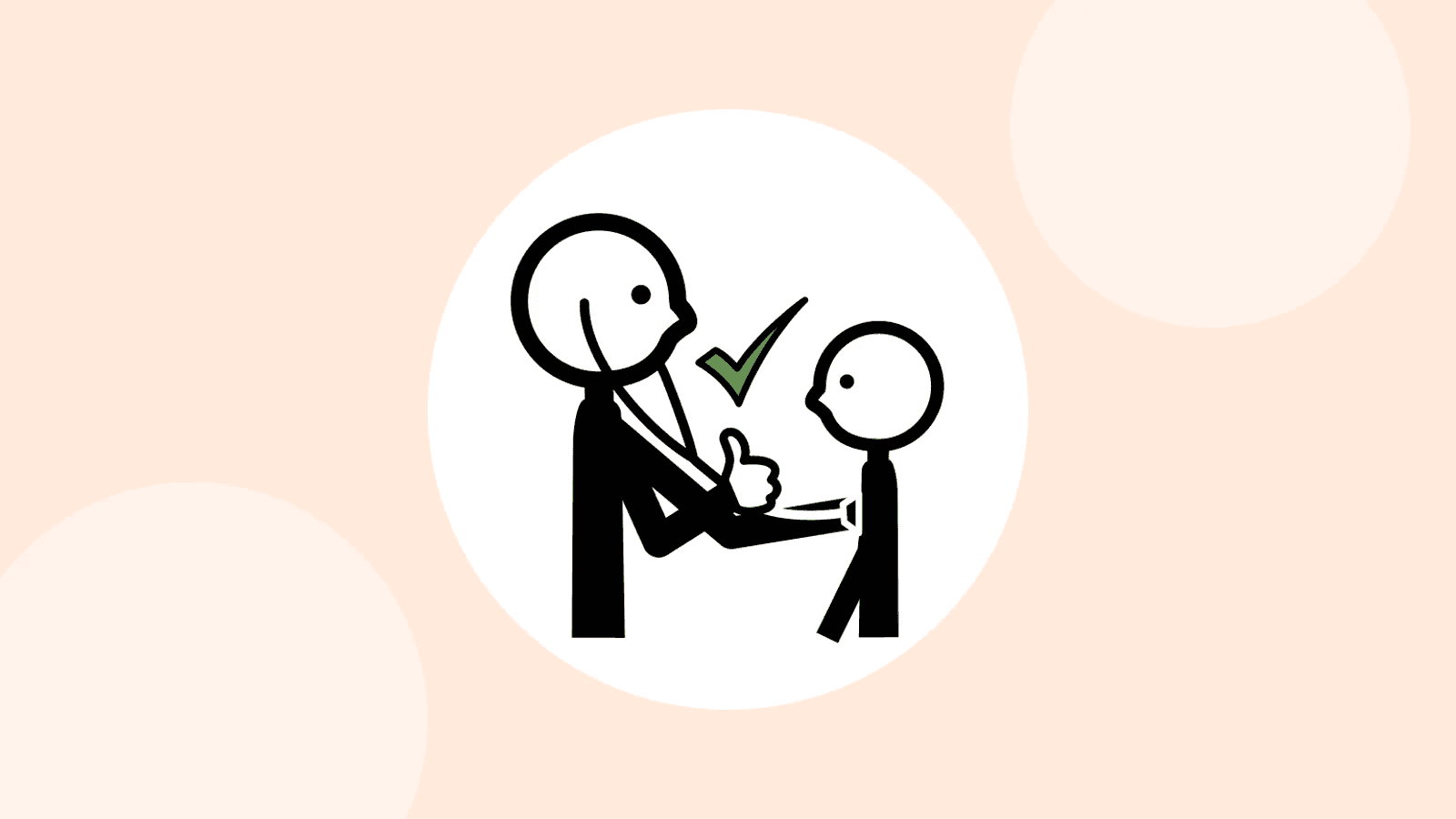
A word only has value if it is respected: when the person says stop or no, adults stop, immediately and every time, unless there is danger. When a refusal cannot be accepted (a medicine, essential care), give them control over the rest: which drink to take it with, in what order, with which comfort object.
Reporting, and being believed
The person needs phrases to tell what happened and ask for help:
- ‘Somebody hurt me.’ / ‘Somebody touched me.’
- ‘Somebody told me to keep a secret.’ / ‘Somebody asked me for photos.’
- ‘Someone’s making fun of me.’ / ‘Somebody bullies me.’ / ‘Online.’
- ‘I want to talk to somebody about it.’ / ‘I want to report it.’
- ‘Believe me.’ / ‘It’s not my fault.’
Add the words to say who (the people around them), where (places) and when.
Self-advocacy scripts for teenagers and adults
More independence also means more situations where you have to stand up for yourself. Prepare scripts that build up, to be used in this order:
- a polite request (‘Please stop.’);
- a reminder of the rule (‘You have to ask me first.’);
- asking for someone in charge (‘I want to speak to the manager.’);
- ‘I’m going to report it.’
If someone confides in you
Listen, give them time to put their message together, don’t suggest answers and write down their exact words. In the UK:
- 0808 800 5000 (NSPCC Helpline): if you are worried about a child;
- 18000 (Relay UK): contact 999 in text, for people who have difficulty speaking or hearing;
- 999 or 112: immediate danger.
Privacy, puberty and relationships
Adolescence brings new needs: talking about periods, changes in the body, intimate hygiene, falling in love. This vocabulary is adapted to the person’s real age, not to an assumed developmental age: ‘I have my period’, ‘my body is changing’, ‘I have a question about my body’, ‘I’m in love’.
Every family has its own values, and it is normal to discuss them as a team. But a person must always be able to ask a question about their body, say what they feel and say no. Teenagers and adults decide for themselves which words they keep and what they share with the people close to them (see Adolescence and adulthood).
How do you protect these words in the tool?
- Put them within immediate reach: access to pain and help from every page. In the Pictalk vocabularies, ‘something’s wrong’ (Springboard 48), ‘it hurts’ (Horizon 80), ‘help me’ and ‘stop’ (Essential 24) stay visible on every page; Springboard 48 also has a ‘Privacy’ page and Horizon 80 a ‘Safety’ page.
- Don’t move them: a word that keeps its place can be found even in a moment of strong emotion (see Organising the grid).
- Don’t delete them without discussing it with the person and the team. If a word makes an adult uncomfortable, that is often a sign it needs talking about, not that it should be removed.
- Keep a paper copy for the bathroom and personal care, where the tablet doesn’t go.

For the GP and hospital, prepare a hospital passport too: see Being understood.
Frequently asked questions
From what age should consent vocabulary be introduced?
From a very young age, with simple words: stop, no, no kiss, ask me. The vocabulary then grows with age.
Won’t these words shock people at school?
Explain to the team why they are there: they protect the pupil. They are used seriously, like other health words.
Pictalk Buddy brings together AAC boards, a visual schedule, guided sequences and notebooks, with the same symbols, on Android, iOS, the web and the watch. A pay-what-you-want app, developed by a non-profit association. Discover Buddy
Sources
- Beukelman, D. R. & Light, J. C., 2020, Augmentative & Alternative Communication (5th ed.), Paul H. Brookes, chapters 5, 11 and 13.
- Studies cited from Beukelman & Light (2020): Bryen, Carey & Frantz (2003); Bryen (2008); Nixon et al. (2017); Lever (2003).